Saturday, September 13, 2014

Found and Lost

My girlfriend and I travelled to Paris about a month ago. We needed a break from our busy daily lives and it seemed like a good idea to hop on a plane for merely 1.5 hour and then just casually wander the streets in 'the city of cities' for a week's time. Which is was indeed. While it was a continuously curious sight to see the Parisian inhabitants being outnumbered in certain parts of Paris by Chinese tourists looking for the next European luxury brand store to empty, the visual impact of legendary French monuments like Louvre, Sacre Coeur and Notre Dame luckily reminded us of our location. My girlfriend and I both have a dominant taste for the modern so a highlight of that area was definitely the groundbreaking Villa Savoy by Swizz-French architect Le Corbusier and his cousin Pierre Jeanneret.


Villa Savoye – a modernist masterpiece built in 1928-31 as a country home for the Savoye family.
Located in the quiet Parisian suburb of Poissy about 40 km from the city center.


Villa Savoye artistically captured by photographer Cemal Emden.


The original model of Villa Savoye - note the inner terrace and roof garden.


A blurry but fantastic aerial photo of Villa Savoye taken shortly after its completion.

 
The Savoye family had to abandon their house in 1941 due to the ever increasing danger of being Jewish in Nazi-occupied France. The German occupation forces soon after ceased the building using it to stock hay and later in
the war poured concrete down the toilettes shortly before fleeing from the advancing Allied forces.


A rare photo taken by a German soldier during WW2. Note the large stack of hay on the 1st floor.

 
The building was shortly used as a shelter by American soldiers who shot out all the windows for fun upon their arrival. Their recklessness quickly caused even greater damage than the Germans did to especially the interior.


A rare postwar photo showing Villa Savoye in a very sad state.

 
The Savoye family returned to their house after the liberation of France but without the financial means to make it livable again. Though still owning the large piece of land surrounding the house, they moved to a nearby farm and started cultivating the land. The once internationally hailed Villa Savoye was subsequently used as a barn to store crops and farming equipment which only furthered its deterioration.


Postcard illustration by Stefi Orazi Studio.

 
It's hard to imagine that one of the world's most important and influential buildings in modern architecture survived these harsh trials. Thanks to worldwide protests from the architectural community, Villa Savoye barely even avoided demolishment in 1959 when the municipality of Poissy - who had just bought the house and land from the Savoyes - wanted to make room for a public school.

The French minister of culture, André Malraux, fortunately intervened and Villa Savoye was finally designated as a historical French monument in 1965. Surprisingly it was left to further deteriorate for more than 20 years before undergoing three series of complicated restoration in 1987-95. It has since been opened to the public.

A discrete poster in the metro led us to a fantastic exhibition at Palais Galliera showing French fashion from 1947-57 by Dior, Chanel, Balmain and many more. A very glamorous experience in postwar elegance not to mention amazing craftsmanship and material sensibility. Sadly, it was not allowed to take pictures but here's a vintage photo from 1950 showing the revolutionary fashion designer Christian Dior surrounded by models wearing his designs.


Of course there was no way around Gustave Eiffel's absolutely amazing steel structure from 1889, the Eiffel Tower. Seeing this technical landmark, 125 years old and 324 meters high, glittering from top to bottom against the dark blue summer night was a sight I'll surely never forget.


Vintage photo by legendary French photographer Rene Jacques (1947).
  
  
Being the world's most visited paid monument welcoming visitor no. 250.000.000 in 2010, the Eiffel Tower has a long record of interesting stories of which many revolve around irradical human behavior. For instance try searching for 'Franz Reichelt' on YouTube and you’ll find original video footage from 1912 showing the French tailor literary jumping to his death from the Eiffel Tower as he tests a homemade parachute. While it might had proven airworthy, his parachute sadly failed to open.


Original painting showing the Eiffel Tower with light installations designed by
French architect André Granet for the international EXPO exhibition in Paris, 1937. 
 
 
A historical fact I personally found very interesting was that a radio transmitter located in the Eiffel Tower success-fully jammed German radio communications in the opening weeks of World War 1. This seriously hindered German troop advancement on Paris and contributed to the Allied victory at the First Battle of the Marne.

However, in stark contrast to my wonderful reminiscence of the Eiffel Tower is an incident not equally pleasant to recall. It was while wandering casually downhill from Sacre-Coeur towards the city center of Paris I suddenly spotted a abandoned piece of furniture standing on the sidewalk far down a side street.


I was immediately lost for words. This sofa is not something I’d see back home in Denmark or any other Scandinavia country for that matter. The slightly angular design and brass frame are much more typical of Italian and to some extent French furniture design from the mid century era.

A fully restored version of this sofa could easily find its place in the many worldwide homes of top collectors shown
in my numerous books on interior decoration. In fact I had two days prior bought yet another such book in the shop of art museum Centre Pompidou which showed the work of fx acclaimed Milan-based interior decorators Dimore Studio who I’m sure would love to use a sofa like this in their next assignment.


The sofa was in overall very good condition except for the defect seat cushions which the previous owners had used
a blanket to cover. It didn't bother me as I actually prefer to fully renovate the vintage furniture pieces I live with.
The fabric on the sofa was a thick type of velvet that looked just like something you'll see on reupholstered vintage furniture in international interior magazines these days. Another aspect of this sofa that's highly exposed among the current design trends was the brass frame. Copper has long been dominating but now it seems brass has gained lead position as the favorite metal of choice among designers and interior decorators.


With the other large piles of interior garbage littering the sidewalk of this quarter there was no doubt the sofa had been discarded and would soon be picked up by a garbage truck. I had to rescue it. I had to get it home somehow.
It would look fantastic sitting fully restored in my living room. But how? I mean, how do you go about standing in
a foreign city on a Saturday afternoon with no French-speaking skills and a sofa in need of immediate pick up? 

My girlfriend and I took a break in a nearby Starbucks while I searched both the Net and my brain for people to call for aid. I got hold of a few Danish vintage store owners who I knew had connections to Paris. Having the sofa trans-ported to Copenhagen could easily be done for $400but having the sofa transported to a storage location in Paris until further notice was impossible given the time of week and also the time of year as many working Parisians spend their vacation in August. So, after contemplating on a long list of ideas I reluctantly had to cancel the plan of adding a international piece of furniture to my collection. My girlfriend and I went back to the sofa only to find it moved to a less flattering position.


My mind was haunted the rest of the day by this lost treasure still sitting unwanted and free of charge on a street corner. Having quite a persistent nature I managed at night after dinner to find a storage facility with a homepage in English. It was located some 800 meters away from the street where I first found the sofa and while my girlfriend and I could possibly carry it through Paris, there was no office personal at the facility during Sunday. So, yet another dead end. Finally, heavy rain during the dark hours of night proved to be the last nail in the coffin.

Damn! … I really hope someone else recognized its potential and took the sofa home before nightfall.

I mentioned above that the my lost gem struck me as being Italian. When generally talking about the use of brass
in modern design, no design culture of the postwar era seemed to have embraced brass more lovingly than that of Italian origin. And when generally talking about Italian design, there's no way around one of its most influential figures, legendary architect, designer, artist and publisher Gio Ponti.


"Enchantment, a useless thing, but as indispensable as bread",
Italian maestro Gio Ponti (1891-1979).


An interior arranged by Gio Ponti for the annual Milan Triennale exhibition in 1957
- note the angular design of both the armchair and sofa.
 
 
You may know him for his classic Superleggera chair from 1957 by Cassina. Superleggera actually means "super light" in Italian and despite its ultra slim appearance with a wooden frame weighing only 1700 grams, the chair is renowned for its incredible sturdiness due to highly crafted joinery.


Countless thick books in all languages have been written about Ponti's theoretical and practical importance to 20th century architecture and design, so I will not go into details with his career here. I already now find it hard to restrain myself from telling you all about his amazing wizardry with shapes and colors, as I've been a passionate admirer of Ponti's geniality for many years. However while keeping in line with the subject Ponti very frequently used brass details on many of his furniture and lighting designs as seen in the examples below.


'Cassettone' chest of drawers (1956).


Dressing table and side chair from Casa Ceccato in Milan, Italy. 
Made by cabinetmaker Giordano Chiesa (c. 1950).


Armchairs, model no. 593 (c. 1950).


'Diamond' lounge chairs. Produced by Cassina (c. 1953).


'Distex' lounge chairs. Produced by Cassina (1950s).


Rare 'Poltrona' armchair. Produced by Cassina (c. 1953).


 Coffee table produced by Fontana Arte (c. 1958).


Chandelier for the Hotel Parco dei Principi in Rome. Produced by Arredoluce (c. 1964).
 
 
Fontana Arte, a Italian design company that was actually co-founded by Gio Ponti in 1932 produced countless high quality brass pieces. Especially from 1954 and onwards when French decorator Max Ingrand overtook the creative leadership and created these pieces among many others.


Rolling trolley (c. 1958).


Wall mirror (c. 1958).


Table lamp - model no. 1815 (c. 1957).


Table lamp (c. 1956).


 Table lamp with integrated vase (c. 1957).


Ceiling light - model no. 2128 (c. 1964).
 
      
A few examples of other Italian designers using brass on various vintage pieces.


'Fuoco d'artificio' ceiling light by Gino Sarfatti. Produced by Arteluce
- designed in 1939 but not executed before the 1950s.


Dining table by Luigi Caccia Dominioni (c. 1950).


Coffee table by Gianfranco Frattini (1956).


'Z' desk by Gabriella Crespi (1974).


Rare 'Egg' chair by Ico Parisi. Produced by Cassina (c. 1954).


Armchairs by Carlo Mollino for the RAI Auditorium in Turin, Italy (1952).


"The most resistant element is not wood, is not stone, is not steel, is not glass.
The most resistant element in building is art. Let’s make something very beautiful."
 
Quote by Gio Ponti


Saturday, August 23, 2014

My favourite photos - by me (part 2).

At the moment I’m working on two large posts that will follow each other soon. However finding pictures of a high enough quality is proving harder than expected. Furthermore one of the posts revolves around a subject I really like esthetically but don’t know much about factually so there are quite a few things I need to read up on. Meantime let us view some more photos of the many stoneware pieces I find new homes for. These are my recent favourites.


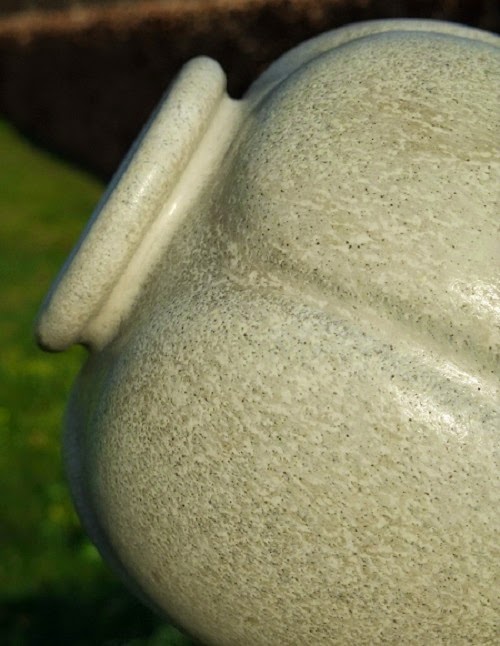
Very modern vase from the private studio of Danish ceramist
Arne Bang in Fensmark, Næstved.


Egg-shaped vase by Danish ceramist Eva Stæhr-Nielsen from Saxbo.


Stoneware bowl from Saxbo with a rarely seen aubergine-glaze.


Bulbous vase by Danish ceramist Arne Bang (model no. 148).


Stoneware vase with large leafe patterns by Danish ceramist
Gerd Bøgelund from Royal Copenhagen.


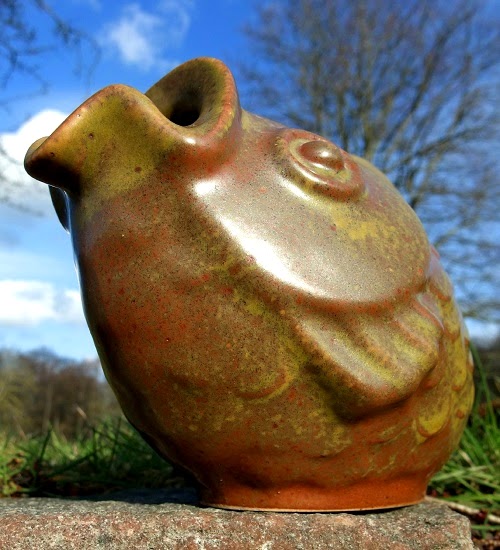
1930s fish-shaped jug in Art Deco-style from the Danish ceramic
factory of Michael Andersen & Søn.


Vase with applied leaves and a charming little snail by
Danish ceramist Arne Bang (model no. 8).


Tall and very rare vase by Swedish ceramist Gunnar Nylund
from the Danish ceramic factory of Nymølle.


Heavy and organically shaped vase by unknown maker,
though likely of Danish origin.


 Unique vase from the private studio of Danish ceramist Jørgen Mogensen.


Saturday, July 26, 2014

Hans Olsen - modular and popular

This summer Danish design legends Hans Jørgen Wegner and Børge Mogensen are being celebrated with large exhibitions here in Denmark commemorating both of their 100th year anniversaries.

However the celebrated ‘Danish modern’ movement of the postwar era is not all about these two gentlemen or other esthetic heavyweights like Finn Juhl, Arne Jacobsen and Poul Kjærholm.
 
In the shadows of desirable icons like the Egg chair, PK31 sofa and Judas dining table you’ll find equally valuable treasures by lesser known Danish architects like Kurt Østervig, Illum Wikkelsø, Ib Kofod-Larsen and the duo Hvidt & Mølgaard to name a few.
 
 
Poster by Danist artist Ib Antoni (1965).
 
With Scandinavian design continuously reaching groundbreaking sales results at premier auction houses like Wright, Phillips de Pury and Denmark’s own Bruun Rasmussen the hunt is on for the next big find. The increasing demand for rare and preferable unique pieces by collectors worldwide fortunately brings much deserved attention to the works of lesser known Danish designers and architects – and unfortunately makes prices skyrocket in particular cases for pieces previously obtainable for the common Danes.

The recent inclusion of two beautiful easy chairs by Hans Olsen at Wright’s annual auction for vintage Scandinavian design made me want to focus on the work of this unusual Danish architect. Similar posts about his colleagues mentioned above will follow in the future.

To my knowledge I’ve made the most comprehensive bio of Hans Olsen available online. If anywhere. I must admit that when I started writing this post I surely hadn’t imagined that it would turn out to be such a extensive project. It especially took a lot of time finding images of a prober quality.

Information about the persona and career of Hans Olsen is very scarce and this is all what I’ve managed to gather through the net and my books.


Hans Olsen was born in 1919 and finished as a cabinet maker in 1941. He shortly after became a student of Kaare Klint at the Royal Danish Academy’s Furniture School and graduated in 1943. Olsen ran his own studio from 1953 with much success and exhibiting his distinct style at the annual fairs of the Cabinetmakers Guild in Copenhagen. Olsen passed away in 1982.
 
The following examples are most frequently seen designs by Hans Olsen. Well, here in Denmark anyway.
 
First, a ‘Roundette’ dining set designed in 1952 for Frem Møbelfabrik. Note how the back of the chair cleverly fits into the edge of the table. A both elegant and space-saving solution.


The chairs were also produced with 4 legs and a different back rest matching the slight change to the table edge.


As a quick note I’d like to show this lesser known variant where the back of the dining chairs protrudes above the tabletop for an easy grip. The chairs are shown with a special dining table that could be expanded from its basic circular shape into an oval and then further into a rounded square by adding leaves hidden in the table’s structure.
It appears to be Olsen’s last design as the source to the picture below is a Mobilia magazine from 1975 (no. 243).


Second, the CS500 series designed for Christian Sørensen & Co. (aka C/S Furniture) in 1962. Available with either upholstered or wooden armrests, all pieces could also be ordered with a low or high back.  It is a design that Olsen would revisit through the years and continuously refine creating very similar upholstered furniture series with subtle differences to esp. the wooden frame and armrests.


Third, this rocking chair – model 532A – was designed by Olsen in c. 1963 and produced
by Brdr. Juul Kristensen. Another frequent guest at the Danish auction houses.


Although esthetically pleasing, functional and comfortable these pieces do not have sufficient charisma to rescue one from eternal public oblivion.

While classically trained as an architect under Danish design legend Kaare Klint’s watchful eye, Olsen was much more experimental than the traditional “Klint school” in his take on creating furniture. Especially his fondness of using bent laminated wood (aka plywood) resulted in some of Olsen’s best designs, desirable even today, and helped him gain a reputation as a serious player on the Scandinavian design scene.

This first example is a simple but clever design as the seat and backrest of this dining chair is formed from a single piece of bent plywood. Created in 1955 and produced by Olsen’s long term collaborator, N.A. Jørgensen.


Olsen also designed this beautiful shell chair in 1955 for N.A. Jørgensen.
Today it can be found in premier furniture stores dealing with vintage design.


However, the best piece of furniture to come from Olsen’s experimentations with bent plywood must

be the Bikini chair. Created in 1961 for Frem Møbelfabrik, it was unquestionable a radical piece for
its time and received much attention in the press for its futuristic lines and confident attitude.

Even now, 53 years later, it still looks completely contemporary.


A bit of mystery seem to revolve around this particular chair, model 163,
created by Olsen for N.A. Jørgensen in 1957.


I’m not sure if this model was further developed into the similar examples below or whether this similarity has simply caused Olsen to be continuously misquoted as the designer of these chairs. I’m sure the majority of people selling chairs like those below, whether private or working at auction houses, have not seen the original b/w photo of model 163. But with Olsen being known for his experimentations with bent plywood, maybe it just seems like an obvious conclusion to make and now this possible misquotation is firmly established. While the overall design of these pieces share the same idea there are very clear structural differences upon closer inspection, esp. in regards to how the bent plywood back is supported by the frame.


Olsen also created a wide range of upholstered furniture with beautiful, curvy lines.
 
The easy chair below was originally designed as a knock down piece for C/S Furniture in 1955.
 
I’m not sure whether the idea was to reduce the cost of transportation/export or to sell the
chair in a flat package to be assembled by customers themselves in present day IKEA-style.


Nevertheless the design was relaunched in a updated, factory-assembled version as the CS800 series in 1956.


The previously mentioned CS500 series from 1962 also seemed to have been updated
or at least proved inspirational for the masculine CS400 series launched in 1966.


This beautiful easy chair was designed in 1956 and produced by Jørgen Jørgensen.


This particular example was sold in May 2014 at Wright in Chicago for $3125 incl. buyer’s premium.


One of my favorite mid century designs is the 'Fried Egg' chair designed in 1956 and produced by Verner Birksholm. Words can simply not express how much I would like to own this chair. Why this chair has such an unusual name is clear from the first picture with a little imagination.


This particular example was also sold in May 2014 at Wright in Chicago for $7031 incl. buyer’s premium.


While Olsen seemed to have favoured creating lounge seating with plenty of upholstery, this easy chair
from 1955 featured a more traditional visible construction. Produced by Verner Birksholm.


Like many of his architectural colleagues in the Mad Men era, both Danish and international, Hans Olsen
showed a keen interest in creating modular furniture for a modern and more relaxed way of living.
 
This resulted in Olsen’s desirable 'TV-bench' designed in c. 1956 and produced by Jørgensen Møbelfabrik.


The seats and table can be moved around, either on the bench and thus providing a normal sitting height,
or be placed freely on the ground in a more lounge-like setting. Finally the cushions from the two seats
could be left on the bench and provide extra seating space. Both 2, 3 and 4 seat versions were made.


This model seems to have been particular popular in and around the sunshine state of California, USA. The picture below is from the highly influencial architectural experiment, the 'Case Study House' program, launched in 1945 by the Arts & Architecture Magazine. The interior is from CSH house #20, known as the Bass House, completed in 1958.


A modified version, 'System 137', followed in 1957 featuring fully upholstered seats.
The table top in the middle is reversible and has a cushion attached on the opposite side.


System 137 also provided storage solutions based on the same basic frame.


Hans Olsen created quite a few modular and bench/sofa-like
furniture pieces in the mid 1950’s including these examples.


Bench with reversible seats - Verner Birksholm - 1955.


Bench - Verner Birksholm - 1956.


'System 1225' - Hovedstadens Møbelfabrik - 1956.

 
The most unusual chair to come from Olsen's constant experimentation must be the 'Frederik the 9th' chair.
     
  
Designed in 1964 and produced by M. J. Rasmussen, this chair got its name from the Danish King Frederik VII who was supposedly very fond of sitting backwards. Olsen’s inspiration came from an old chair at Rosenborg Castle in Copenhagen, a former residence of the Danish royal family now turned into a museum.
 
This modern reinterpretation won Olsen the A.I.D. gold medal (American Institute of Interior Designers) in 1965.


More beautiful furniture by Olsen can be seen in these original photos.


Dining chair (model 208) - Falster Møbelfabrik - 1956.


Dining chair (model 149) - N.A. Jørgensen - c. 1956.


Easy chair - N.A. Jørgensen - c. 1957.


Sled chair - Verner Birksholm - c. 1957.


Installation at the yearly Cabinetmakers' Guild - Ove Lander - 1951.
  
  
Many Danish furniture classics of the postwar era have been relaunched during recent years and a few of Olsen’s designs would seem relevant for reproduction. I recently stumbled across an official-looking homepage from 2012 stating that 4 of Olsen’s designs, incl. the Bikini chair and Fried Egg chair, would be relaunched soon. However I
have neither heard or read a word of it from any other source so maybe the project has since been abandoned.
 
I hope you’ve enjoyed this Hans Olsen bio. In the future I’d like to write similar posts featuring Danish architects Illum Wikkelsø, Ib Kofod-Larsen, Kurt Østervig and Tove & Edvard Kindt-Larsen.